
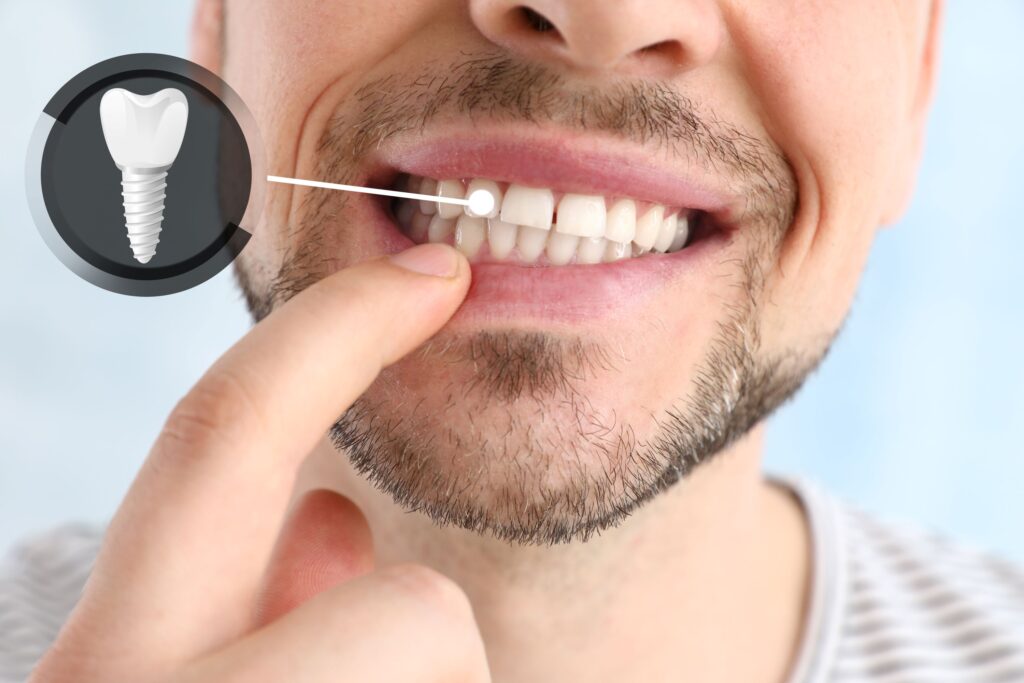
Many experts consider dental implants the ideal way to rebuild smiles after tooth loss because of their unique advantages. Unlike bridges and dentures, these restorations are placed directly into your jaw, and eventually fuse with the bone to become a more permanent part of your mouth.
Today, dental implants have an incredibly high success rate of over 90%, but that hasn’t always been the case. Continue reading to learn more about how this treatment evolved to become the popular procedure that it is today!
Early Attempts
It’s easy to assume that dental restorations are a contemporary invention, but historic records tell us that’s not the truth. In fact, scientists have discovered evidence of ancient cultures using a variety of materials, such as seashells, carved precious stones, or the teeth of other people or animals, to fill in the gaps in their grins left behind by missing teeth.
However, it’s believed that these earliest attempts were likely intended to be an aesthetic improvement rather than a functional one. The human body typically rejects foreign objects, and the mouth is no exception. That means these earliest replacements were likely not strong enough to withstand the pressure of biting and chewing.
Upgraded Materials
People continued to seek methods of rebuilding their smiles and experimented with different options, with very little success. For example, in the 1500s to 1800s in Europe, scientists attempted replacements made of gold, silver, and porcelain, but continued to rely heavily on teeth sourced from cadavers.
Then, in the 1900s, Drs. Alvin and Moses Strock discovered that Vitallium, a biocompatible alloy used for hip bone implants, could also be used to restore teeth. As a result of this discovery, they are credited with being the first people to successfully place an implant into a patient’s jawbone.
Finally, in 1952,Dr. Per-Ingvar Brånemark was studying bone healing and regeneration when he accidentally fused titanium onto a rabbit’s femur. It was then that he realized this material could be ideal for other applications, such as dental implants.
Dental Implants Today
Although many providers continue to offer these titanium teeth, it’s no longer the only option available. With ongoing advancements in technology and materials, new options, like tooth-colored ceramic, continue to gain popularity. Not only is the resilient porcelain biocompatible, but it’s also less likely to contribute to sensitivity or metal allergies.
Furthermore, implants today are capped with lifelike restorations that can be customized to look and feel as natural as possible. For instance, they can be created to match the size, shade, and shape of your natural enamel for beautiful, seamless results.
If you’re considering dental implants but are unsure whether it’s the best treatment for you, the best way to find out is to contact your dentist for a consultation!
Meet the Author
Dr. Michael O’Brien is passionate about helping patients improve their daily lives by enhancing their dental health. He earned his dental degree from the University of Las Vegas Nevada School of Dental Medicine. Since then, he has remained committed to continuing education so he can offer the most contemporary, holistic treatment options using state-of-the-art technology. He offers a complete menu of services, including dental implants, to meet your unique needs under one roof. You can request an appointment on the website or by calling (918) 477-9000.